
2026-11-22 · XSMATECH technical note · 4 min read
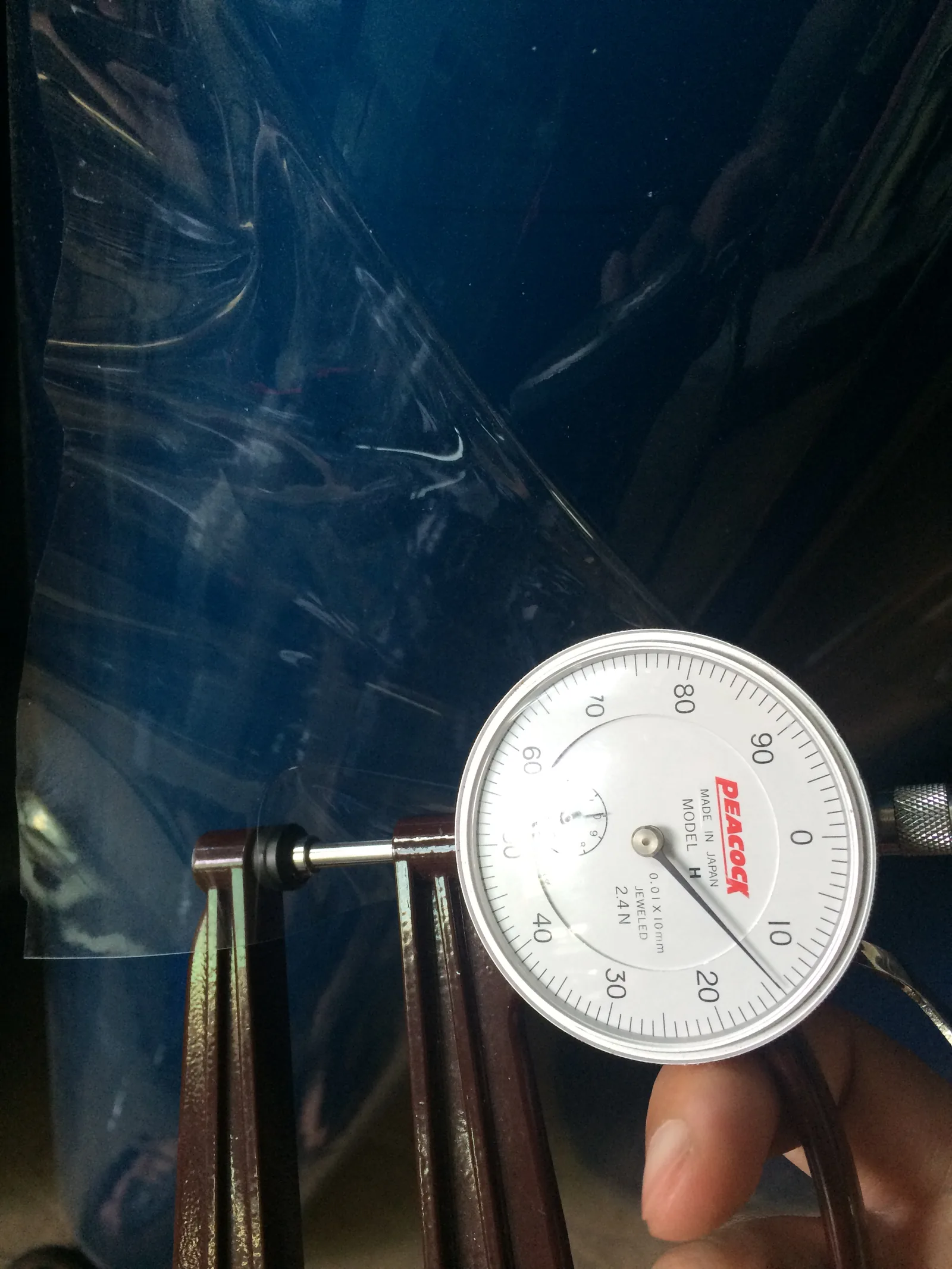
Every film supplier quotes a thickness tolerance. Most buyers read it as a quality statement and move on to price. It is actually a yield calculation, and it is worth doing before you place the order.
What ±0.02 mm means in practice
If you order 0.20 mm film with a tolerance of ±0.02 mm, you will receive material between 0.18 mm and 0.22 mm. That is a 20% spread on a 0.20 mm nominal. On a 0.06 mm film, the same absolute tolerance is a third of the nominal thickness.
Two things follow. First, a tolerance quoted in millimetres is not comparable between gauges; convert it to a percentage of nominal before you compare suppliers. Second, the practical question is not the tolerance band but where inside the band the supplier runs.
Why suppliers run at the top of the band
Running slightly heavy is the safe option for a calender operator: it protects against going under the minimum, which is the failure that gets material rejected. The consequence is that a nominal 0.20 mm film averages 0.21 or 0.22 mm across the roll.
For a converter, that is 5-10% more material per square metre than the number you costed. On a bag or a folder where film is the dominant cost, it lands directly on margin.
How to test it without a lab
- Take ten measurements across the width and along the length of one roll, not one measurement from the middle.
- Record the average, not just the minimum. The average is what you pay for.
- Ask for the gauge record of the batch. A calender line logs thickness continuously; a supplier who cannot produce that log is guessing.
What we do
We hold ±0.02 mm and we report the batch average, not only the spec band. Before a custom run starts, the specification sheet is confirmed in writing: nominal gauge, tolerance, width, colour reference, surface finish, core size and packing. If the target gauge falls between two standard settings, we say so at quotation stage rather than shipping something close and calling it 0.20 mm.
The commercial point
A supplier who is 5% heavy on gauge is not 5% more expensive on the invoice. They are 5% more expensive on every unit you ship, for as long as you buy from them. That is the number worth comparing, and it is usually larger than the difference in the quoted film price.
If you want the gauge record for a specific grade, or a sample measured across the web, tell us the thickness and width you run.
Contact: Oven Pan · admin@xsmatech.com · WhatsApp +86 138 2608 3558 · xsmatech.com