
If you buy PVC, TPU or EVA film for bags, last week was a reminder of how fast raw material prices can move.
In the week of November 5–12, 2026, China’s polymer market — where most film for Southeast Asia’s bag industry is produced — saw some of the sharpest weekly moves of this quarter. Polyethylene film grades dropped by RMB 420–1,041 per tonne in a single week. Polypropylene fell 5.5%. EPS fell more than 11%. Meanwhile PVC, which follows a different cost logic, barely moved.
If your film quote from two weeks ago suddenly looks “wrong”, this post explains why — and what smart bag factories do about it.
What actually happened this week
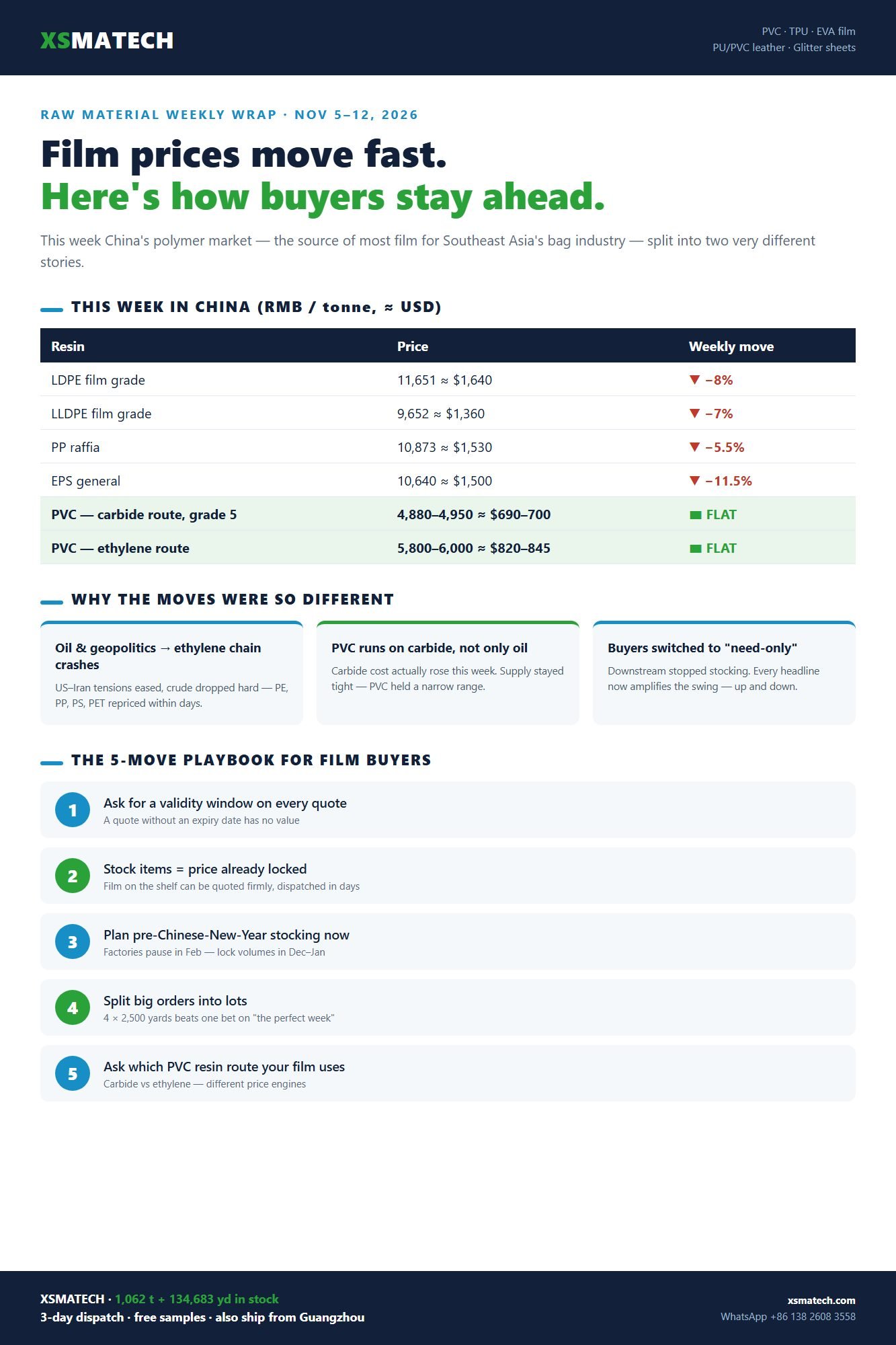
Figures below are Chinese domestic market prices, week of Nov 5–12, 2026 (RMB per tonne, ≈ USD at ~7.1):
| Resin | Grade / Region | Price (RMB/t) | Weekly move |
|---|---|---|---|
| LDPE film grade | China domestic | 11,651 (≈ USD 1,640) | ▼ −1,041 (≈ −8%) |
| LLDPE film grade | China domestic | 9,652 (≈ USD 1,360) | ▼ −718 (≈ −7%) |
| HDPE film grade | China domestic | 9,927 (≈ USD 1,400) | ▼ −420 (≈ −4%) |
| PP raffia | national average | 10,873 (≈ USD 1,530) | ▼ −634 (−5.5%) |
| EPS general | Jiangsu | 10,640 (≈ USD 1,500) | ▼ −11.5% |
| PET bottle grade | East China | 8,210 (≈ USD 1,160) | ▼ −520 (−6.0%) |
| PVC — carbide route, grade 5 | East China | 4,880–4,950 (≈ USD 690–700) | → flat |
| PVC — ethylene route | East China | 5,800–6,000 (≈ USD 820–845) | → flat |
The takeaway is not “prices are falling” — it’s that different resins moved in completely different directions and speeds. That matters for anyone buying film.
Why the moves were so different
1. Oil and geopolitics set the tone for the ethylene chain
Most plastics (PE, PP, PS, ABS, PET, EPS) price off the oil → naphtha → ethylene/benzene chain. When US–Iran tensions eased this week, crude dropped hard, and the entire chain repriced within days — hence LDPE losing ~8% in a week.
2. PVC follows a different cost logic — carbide, not only oil
A large share of Chinese PVC is made from calcium carbide, not oil. This week carbide prices actually rose while oil-based resins crashed. Result: PVC producers kept low operating rates, supply stayed tight, and PVC held a narrow range. If your film supplier quotes “PVC film” without telling you which route the resin came from, you’re missing half the price story.
3. Downstream demand switched to “need-only” mode
Across every resin report this week the same phrase repeats: buyers purchased strictly for immediate needs, holding cash and waiting. When buyers stop stocking, bad news amplifies the drop — and good news triggers a rebound (EPS rebounded mid-week when styrene stabilized and buyers rushed low-price offers).
What this means for bag factories
A film quote is a snapshot of a moving market. The distance between “quote received” and “order placed” can change your real cost by 3–8%. If you buy film monthly, this volatility is not noise — it is part of your cost structure.
The 5-move playbook
1. Ask for a validity window on every quote. A serious film supplier states how long a price holds — typically 7 days for resin-sensitive items. A quote without a validity date has no value.
2. Prefer stock items — their price is already locked. Film made from resin bought last month sits in a warehouse at a known cost. Stock colours and thicknesses can be quoted firmly and dispatched in days. Custom production prices against future resin purchases — that’s where volatility hits you.
3. Plan your pre-Chinese-New-Year stocking now. Chinese factories pause for CNY (Feb 2027) and freight space tightens for weeks around it. The December–January window is when buyers who lock volumes early avoid both price jumps and lead-time chaos.
4. Split large orders instead of betting on one moment. If you expect to use 10,000 yards over a quarter, four lots of 2,500 usually beat one bet on “the perfect week”.
5. Ask which resin route your PVC film uses. Carbide-based and ethylene-based PVC have different price engines (this week: one flat, one range-bound). Knowing the route tells you whether a crash or a cost spike actually affects you.
How we handle volatility for you
We track resin markets daily, because our prices depend on them. What that means for our customers:
- Stock items are quoted firmly — the resin cost is behind us, so we can hold a price while you decide.
- Custom items always come with a validity window — no “mystery expiry” quotes.
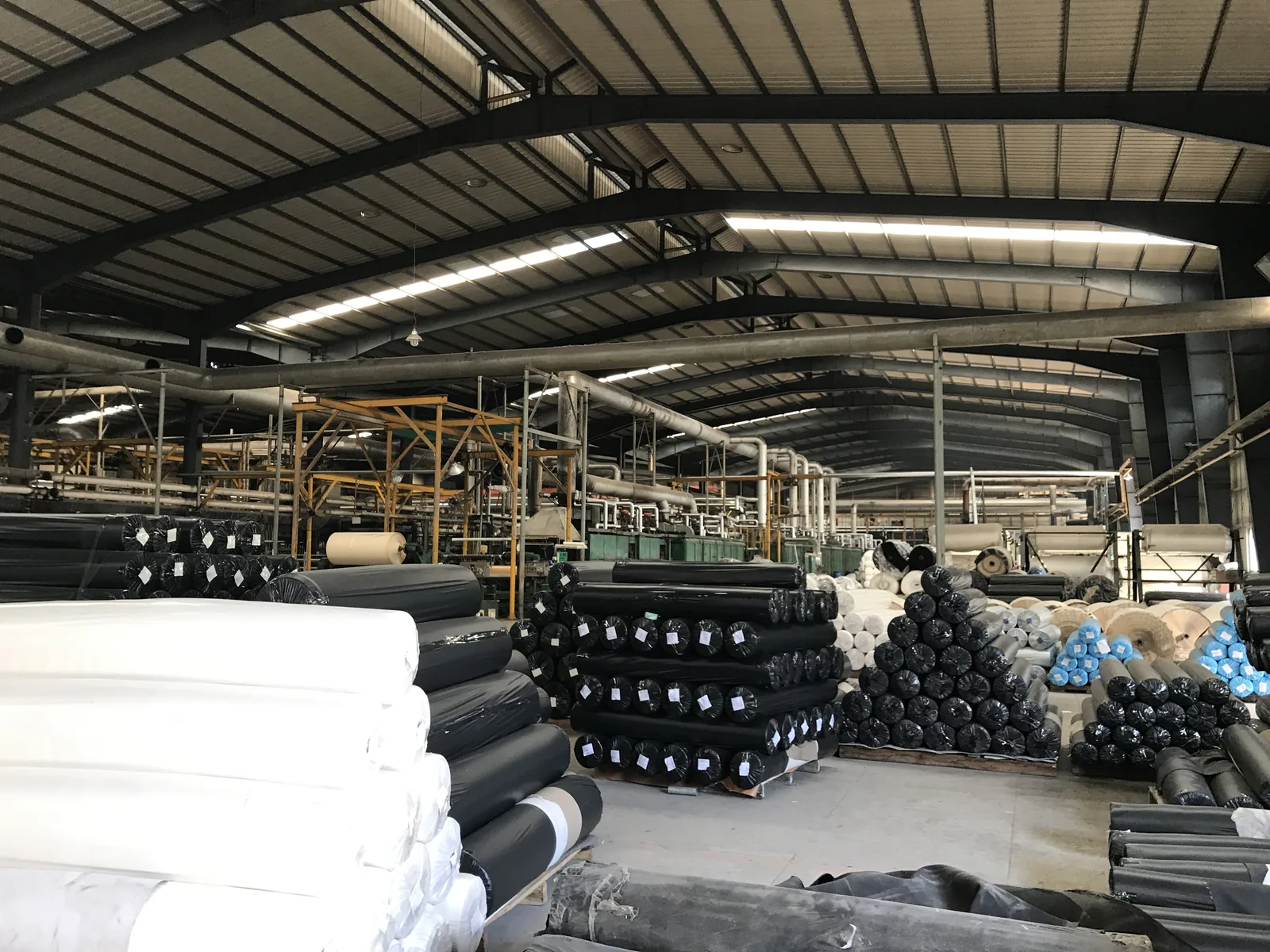
- Dispatch in 3 days from stock — 1,062 tonnes and 134,683 yards across 1,013+ colours are physically on our shelves, so you buy when you see the right moment.
- Free samples before you commit a single order.
Stock moves. Your supplier shouldn’t.
Raw material markets will keep moving — nobody controls that. What you can control is buying from a partner with real stock and honest quote windows.
Current stock list and prices: xsmatech.com/stock-list — or message us on WhatsApp +86 138 2608 3558 and we’ll send today’s firm prices plus free samples.