
Flexible PVC film is one of the most widely used plastic films in global manufacturing – from clear packaging bags and raincoats to table protectors, stationery and inflatable products. This guide explains what PVC film is, how it is made, what it can do for your product, and what to check before you buy.
What is PVC film?
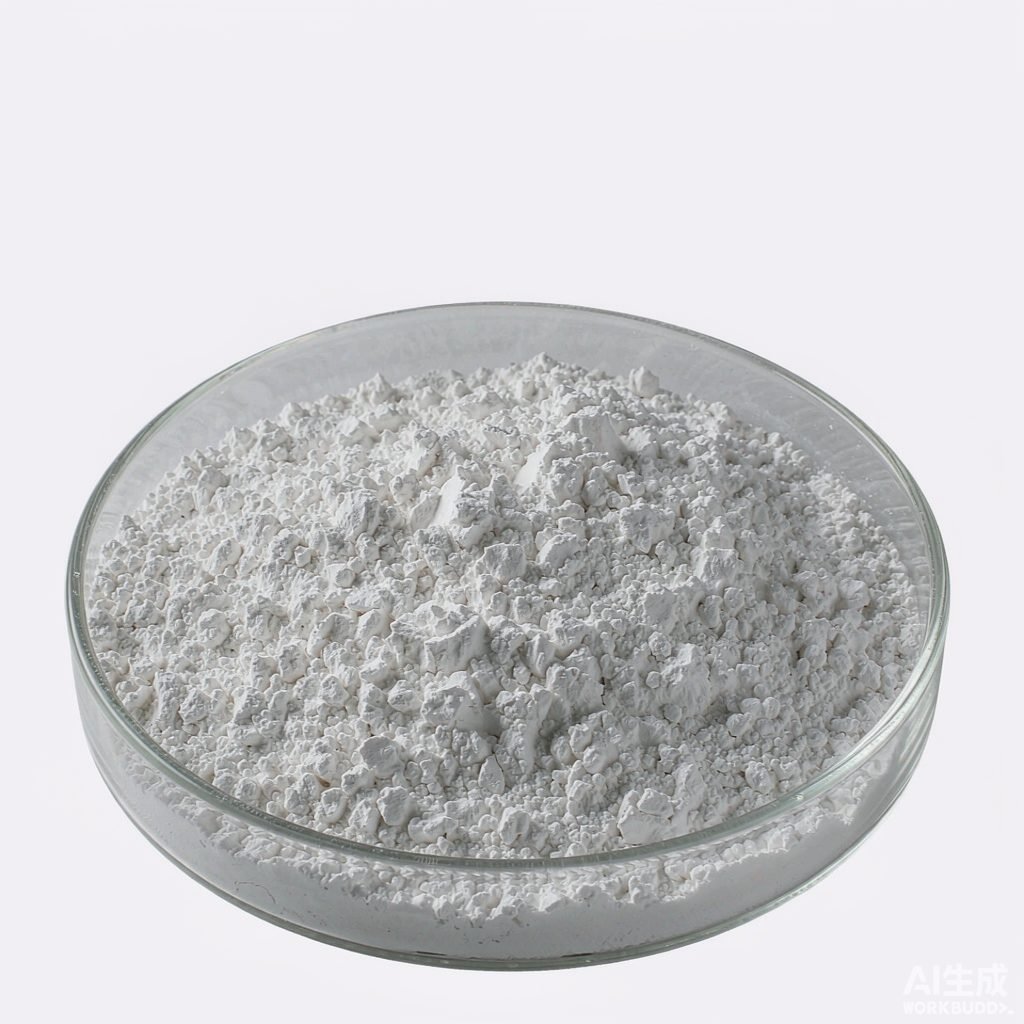
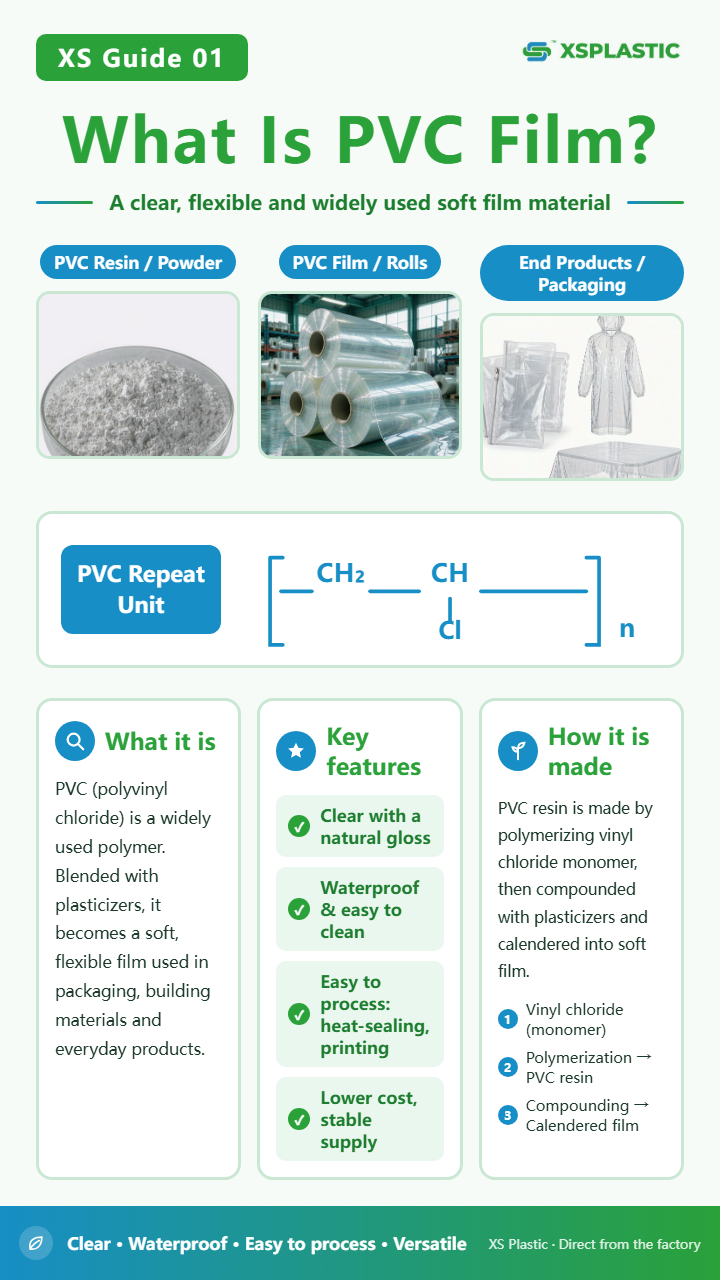
PVC (polyvinyl chloride) starts as a white resin powder, produced by polymerising vinyl chloride monomer into long polymer chains. On its own the resin is rigid, so manufacturers blend it with plasticizers and stabilizers: the more plasticizer, the softer and more flexible the finished film. This is why one material can cover everything from rigid sheets to a soft, drapable clear film.
How PVC film is made
Production follows three steps:
- Compounding – PVC resin is mixed with plasticizers, stabilizers and other additives into a uniform dry blend.
- Plasticising – the blend is heated and kneaded until it flows like a viscous dough.
- Calendering – the hot mass is squeezed through heated rotating rollers into a continuous film of precise thickness, then cooled and wound into rolls.
Calendering gives excellent thickness control (down to ±0.01 mm on a good line) and a clean, glossy surface, which is why it remains the standard process for transparent and coloured flexible films under about 0.6 mm.
Key properties of flexible PVC film
- High transparency and gloss – super-clear grades look like glass on the shelf.
- Waterproof and easy to clean – ideal for protectors, tablecloths and outdoor items.
- Easy processing – welds by high-frequency, sews, glues and prints well; accepts custom colours matched to Pantone codes.
- Good chemical and weather resistance for daily-use goods.
- Flame-retardant formulations available for specific markets.
- Low cost with stable supply – one of the most economical clear films per square metre.
Common applications
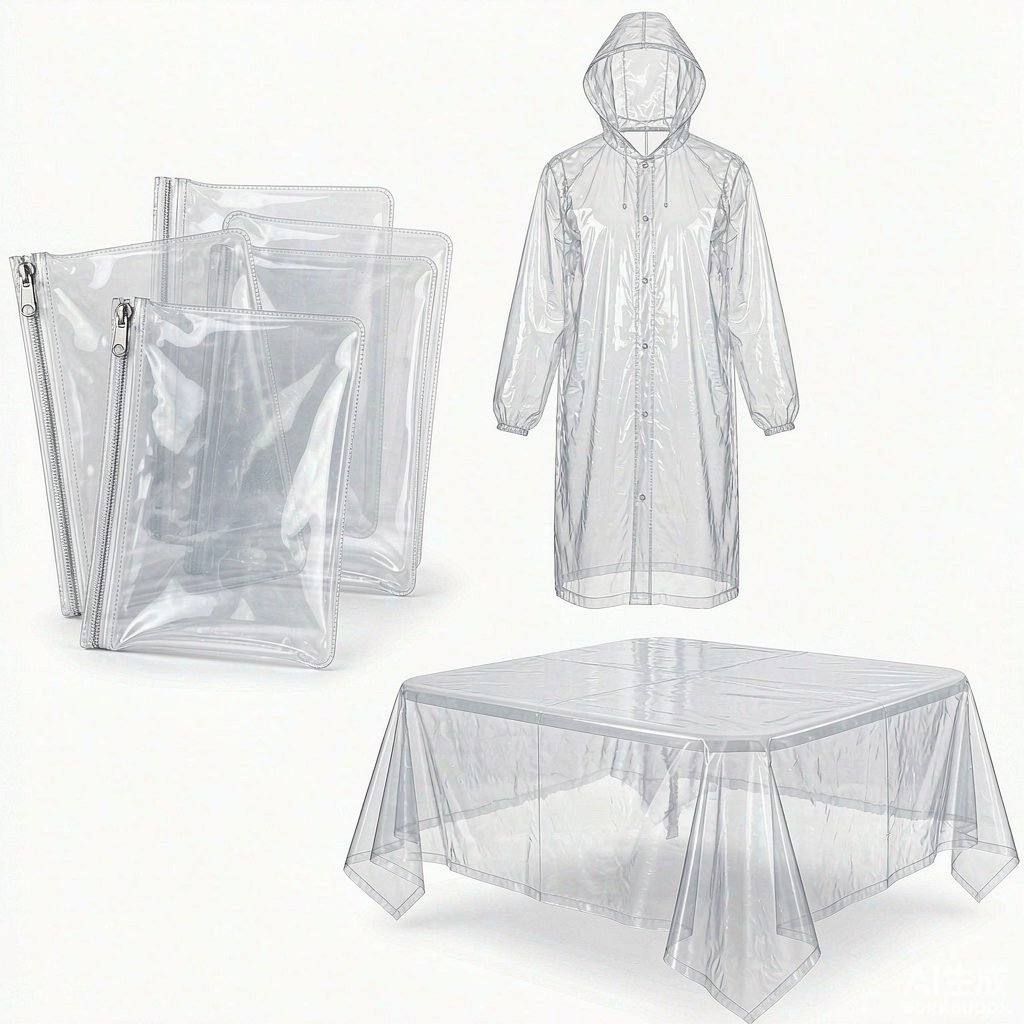
Typical uses include clear zipper and garment bags, rainwear, table and furniture protectors, stationery and book covers, blister and clamshell packaging, inflatable toys, curtains and craft sheets. Decorative grades such as jelly, laser and glitter films add shelf appeal for holiday and gift packaging.
Typical thickness and width
| Product | Thickness range | Max width |
|---|---|---|
| Super clear / glossy PVC film | 0.06 – 0.50 mm | 1.52 m |
| Frosted / coloured matte PVC film | 0.10 – 0.60 mm | 1.52 m |
| Jelly / laser / glitter PVC film | 0.15 – 0.50 mm | 1.52 m |
| TPU film (companion material) | 0.10 – 0.50 mm | 1.52 m |
Standard roll length depends on thickness; stock items ship in days, custom production takes about 25 days after deposit.
What to check before buying
- Compliance – ask for REACH, RoHS and EN71-3 reports, and phthalate-free plasticizer options if your market requires them.
- Thickness tolerance – a tight tolerance (±0.01 mm) keeps your conversion process stable.
- Colour matching – confirm the supplier can match Pantone codes in-house rather than outsourcing.
- Export packing – rolls in PE bags and cartons on fumigation-free pallets, with desiccants to prevent container rain.
Why source from XS Plastic
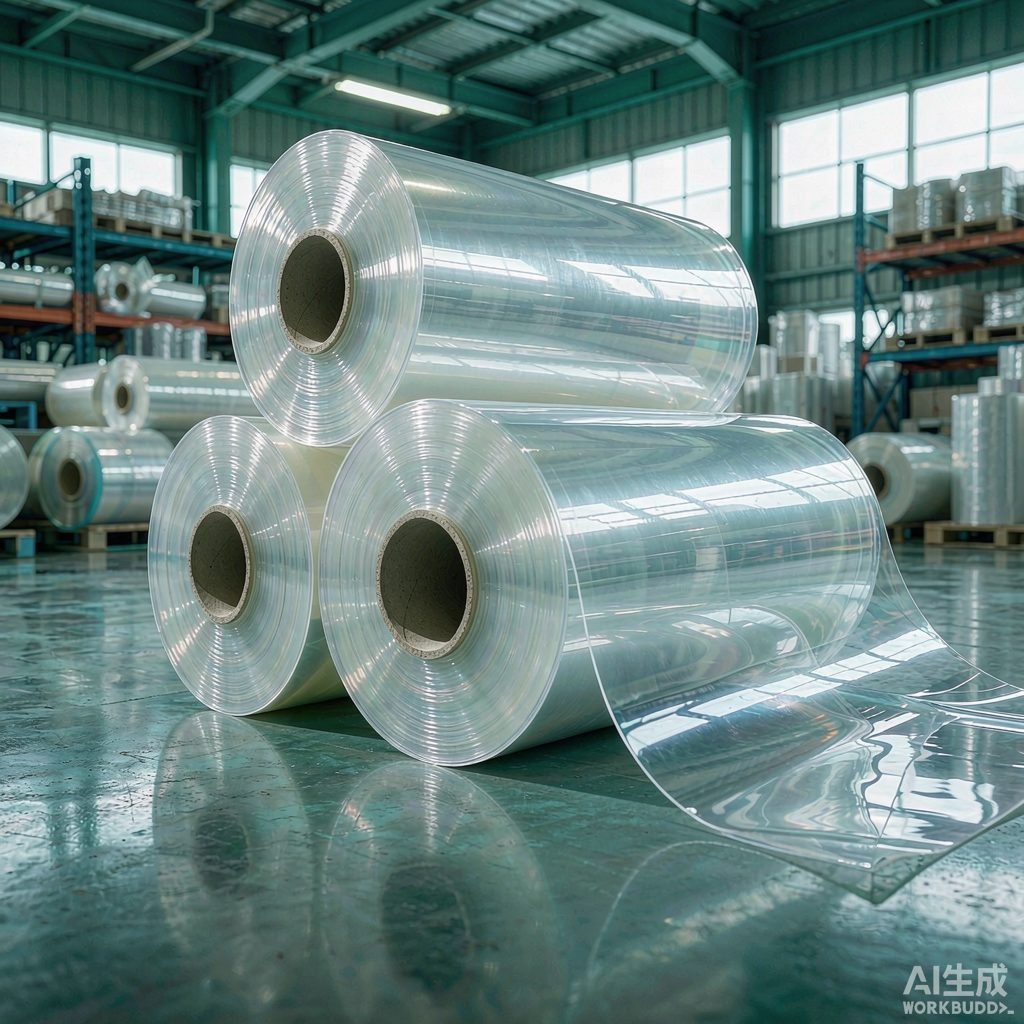
XS Plastic (Xingsheng New Material) manufactures PVC, TPU and EVA films in its own 10,000 m² factory with eight production lines and 3,000 tons of monthly capacity. We offer OEM/ODM custom colour matching, low MOQs (ready-to-ship items from 50 yards), free samples of stock items, and export packing ready for EXW, FOB, CIF or DDP terms.
Have a project in mind? Send us an inquiry for an exact quotation, browse the stock list for ready-to-ship rolls, or request free samples to test on your own machines.